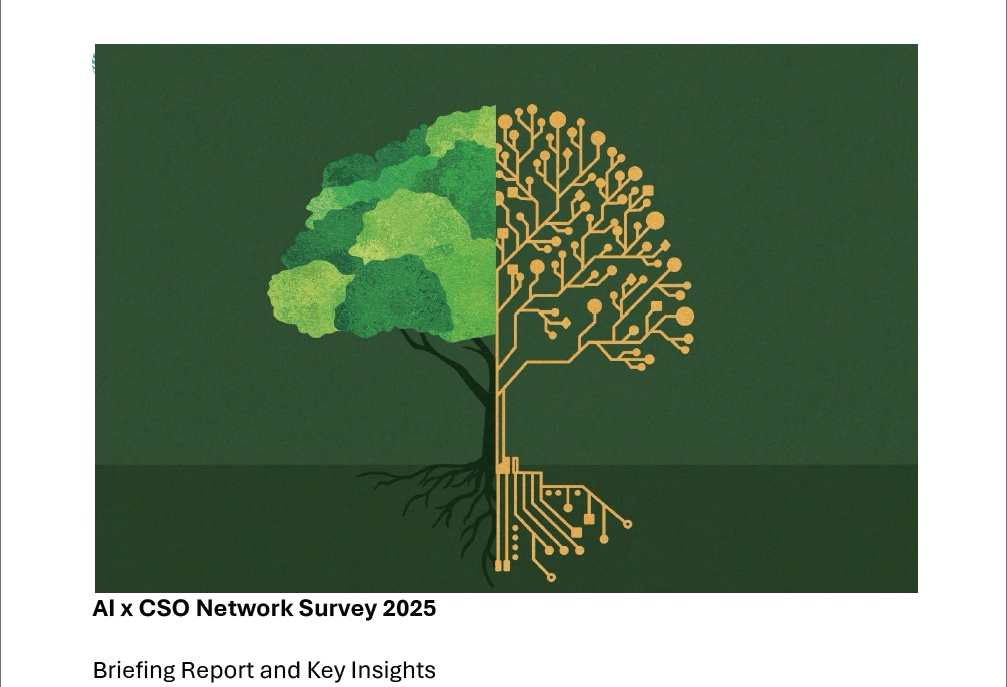
The AI x CSO Network Survey 2025 provides a practitioner-led view of how artificial intelligence is shaping sustainability strategies across the Middle East and North Africa (MENA). Based on insights from sustainability leaders, executives, and AI practitioners, the survey assesses adoption levels, perceived value, impact areas, and the organizational barriers preventing scale. Its core conclusion is clear: AI is already seen as a high-value sustainability enabler, but its full impact is constrained by governance, data maturity, and leadership models—not technology
Key Findings
1. Sustainability and AI are now strategic, not experimental
92% of organizations say sustainability plays a significant role in corporate strategy.
89% view AI as a high or very high opportunity to advance ESG goals.
AI is no longer treated as an innovation initiative, but as a strategic capability tied to performance, resilience, and competitiveness.
2. Environmental use cases deliver the clearest value today
Over 50% of organizations report AI-driven carbon reductions through optimized operations.
Sustainable operations and supply chains show the highest adoption and fastest time-to-impact.
AI’s strongest proven impact is currently in the “E” pillar—energy efficiency, emissions reduction, and resource optimization.
3. Adoption is progressing, but maturity remains uneven
59% of organizations are piloting or scaling AI.
Only 16% report mature, enterprise-wide deployment.
Most AI initiatives optimize existing processes rather than redesigning business models around sustainability by design.
4. Structural barriers outweigh technical constraints
The primary obstacles to scale are organizational:
Weak decision-making frameworks
Sustainability not treated as a value-creation lever
Fragmented governance and limited CSO authority
Technology, talent, and infrastructure rank lower as constraints.
5. Data and measurement are the critical gaps
Despite strong perceived value, most organizations cannot reliably measure ROI or sustainability impact from AI. ESG data is fragmented, incomplete, or unavailable in real time—limiting foresight, confidence, and investment decisions.
6. Responsible AI is underdeveloped but strategically critical
Only 17% participate in shaping sustainable AI standards
Just 3% regularly audit AI systems for bias
Governance, transparency, and ethical AI are emerging as competitive differentiators as disclosure and regulatory expectations tighten.
MENA organizations have a clear opportunity to leapfrog—from fragmented AI pilots to enterprise-scale sustainability transformation. Success will depend less on new tools and more on integrated AI–ESG governance, robust sustainability data foundations, empowered CSO leadership, and disciplined prioritization of high-impact use cases. Organizations that address these foundations now will define the region’s next phase of sustainable competitiveness.